PeiyangZeng
Doctoral Researcher at the University of Sheffield. I study electrical engineering, specialising in the things that turn the wheels of your electric car, or your electric plane (if you happen to own one). I also photograph places.
About
I make things spin. Before that, I made things float.
These days I spend most of my time persuading copper, steel and magnets to cooperate, and teaching electric motors to keep calm and carry on when part of them breaks. In an electric car, a faulty motor ruins your afternoon. In an electric plane, it ruins considerably more, so we would really rather it kept spinning. Before that, I spent several years helping trains levitate, which is exactly as fun as it sounds and involves more liquid nitrogen than you would expect.
The longer version. I am a doctoral researcher in the School of Electrical and Electronic Engineering at the University of Sheffield, working on fault-tolerant permanent magnet machines for transportation electrification. My work focuses on fault-tolerant design at the machine level, so that the machine itself can keep running safely through faults such as single-phase short circuits and inter-turn short circuits, in applications where stopping is not an option, from electric vehicles to more-electric aircraft.
Before Sheffield, I studied at Southwest Jiaotong University (2017–2024), where my undergraduate degree was in railway vehicle systems. My master's research focused on high-temperature superconducting (HTS) pinning maglev, in particular measuring permanent magnet guideway (PMG) irregularity and its effect on levitation dynamics. Later, I moved on to the electromagnetic analysis and conjugate heat transfer (CFD) simulation of a double-sided long-stator permanent magnet linear synchronous motor for an ultra-high-speed maglev test model aiming for 1,500 km/h, and that is where my interest shifted towards transportation electrification. My broader interests include applied electromagnetics, electromechanical energy conversion and dynamic analysis.
Featured work
Fault-tolerant permanent magnet machines with mixed-layer fractional-slot concentrated windings
P. Zeng and G.-J. Li, IEEE Transactions on Energy Conversion, 2026, doi: 10.1109/TEC.2026.3741602
Aircraft are increasingly replacing hydraulic systems with electric motors, including in safety-critical roles such as flight-control actuators. A motor in these roles must keep running when one of its phases fails. That means each phase should be magnetically isolated from the others, and any short-circuit current should stay low. Fractional-slot concentrated windings are a natural fit for this, and they come in two standard forms. Winding every other tooth (single-layer) isolates the phases well, but brings longer end-windings and more torque ripple. Winding every tooth (double-layer) runs more smoothly, but couples the phases magnetically. For compact machines with an odd number of slots, such as the 9-slot/8-pole design studied here, the single-layer option is not available at all.
In this paper we propose a mixed-layer winding that brings this isolation to the 9-slot/8-pole permanent magnet machine. We combine single- and double-layer coil arrangements and redesign the stator tooth layout to suit them. The resulting machine achieves a unity winding factor and near-zero mutual inductance between phases. It also has higher self-inductance, which suppresses fault currents. At the same time, it delivers the same average torque as its conventional double-layer counterpart, with comparable copper loss. We build up the design step by step and explain why it works using analytical magnetic-circuit models. We then validate it with finite-element analysis and experimental tests on a prototype.
From a conventional double-layer winding to the proposed mixed-layer machine, and the stator of the prototype built to test it.
Publications
- 2026
- 2025
- 2025
- 2023
- 2023
Full list on ResearchGate
Photography
I used to do photography. Then life happened.
I came back to photography on film, as a small protest against the digitalisation of everyday life. It is entirely possible that this is simply a consumerist fantasy, lovingly packaged by late capitalism and sold back to me one roll at a time. I am choosing not to think about it too hard.
Autumn in Padley Gorge
October 2026, Minolta Hi-Matic 7s / Kodak Ektacolor Pro 800
Tree heather of Madeira
September 2026, Ricoh 500RF / ProImage 100
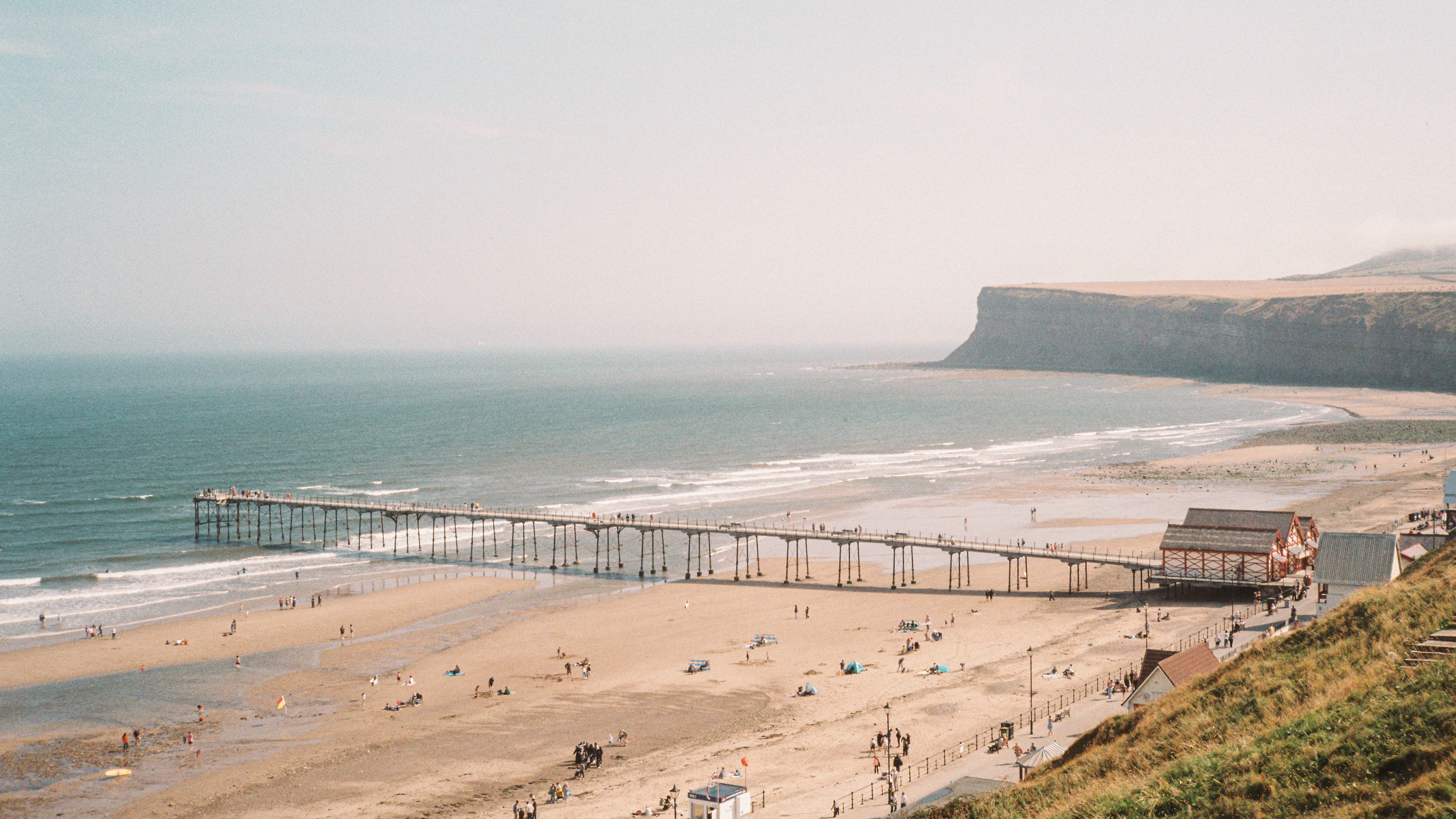
Saltburn-by-the-Sea
August 2026, Ricoh 500RF / Kodak Gold 200